
A kingdom can keep a punishment alive long after the people it condemned have turned to dust. In the boglands of The Red Tomorrow, our interactive dark fantasy novel, many inhabitants bear the brands of crimes committed by ancestors whose names have faded into the mist. They were born beneath a sentence written for someone else, at the ragged edge of a kingdom that has no place left for them. Generations have passed, and the punishment has become as ordinary as rain. This is one way grimdark fantasy reveals its character: in a world where cruelty has sunk into the soil and bloomed as custom.
Here, you guide Jonas, a father crossing a haunted kingdom in search of Hekion, the son stolen from him by a sorcerer in white. There is something ancient and immediate in the desire to bring a child home, something that reaches through the darkness before we know the names of the powers gathered against him. Love can become dangerous when it must move through the world. Jonas will meet people carrying griefs of their own, and you will decide what he does when their claims collide with his. His journey draws us toward the question at the heart of this guide: what kind of darkness makes a story grimdark, and what happens to the souls forced to live beneath it?
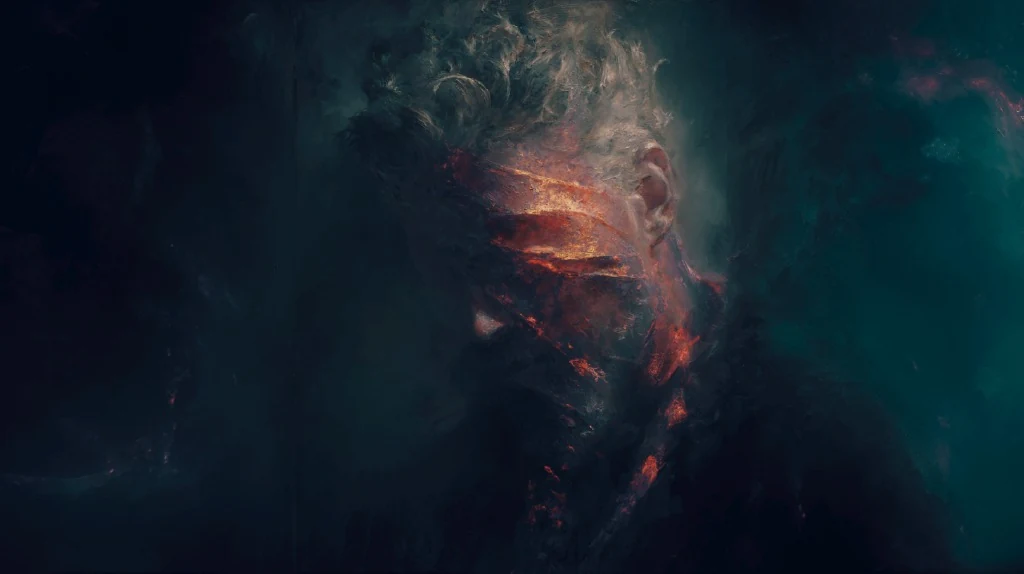 Jonas, the man you guide through the kingdom.
The World Beneath the Story
Grimdark fantasy gathers a bleak or cynical vision, morally tangled characters, and a deep suspicion of those who hold the keys to power. Its worlds offer no gentle promise that virtue will be rewarded, or that a rightful victory will mend everything broken along the way. The borders of the term remain disputed. Grimdark Magazine’s editors describe hostile settings and morally grey characters while leaving room for hope, a reminder that even the blackest night need not swallow every star.
The distinction becomes clearer when we ask what a story wants us to believe. A ruined fortress may shelter a tale of redemption. A monster may be slain in a world where courage still has the power to restore justice. Dark fantasy can draw its dread from haunted places, ancient curses, or supernatural horror, and it may overlap with grimdark, but the presence of terrible things tells us only part of the story. The deeper question is the outlook that gives those terrors their meaning.
Consider the death of a tyrant. The people who obeyed him still have lives to protect, while those who prospered beneath his shadow still have fortunes to lose. A new ruler inherits their interests along with the throne. Grimdark often lingers over that inheritance, letting victory shine for a moment while asking how much it can truly change. In “Why so Cynical?”, Joe Abercrombie describes his wish to unsettle familiar heroic expectations, giving recognisable fantasy figures motives and fates that twist away from the comfort readers may have expected.
When Cruelty Becomes Custom
Some of fiction’s most disturbing worlds have learned to live comfortably with their own brutality. An injustice survives because people profit from it, fear resisting it, or have never seen life arranged any other way. The person suffering beneath the system may discover that everyone understands the rules perfectly well. What is missing is anyone with both the power and the courage to break them.
The witches of The Red Tomorrow live inside one such contradiction. Ordinary people seek their craft, while the kingdom brands it blasphemy, and the sorcerers who serve the crown are always listening. A woman may be indispensable to her neighbours and still remain prey to the authorities above them. Some witches hide their work beneath the respectable name of alchemy, passing their preparations through a trade that gives them a thin veil of safety. The need survives, and the danger clings to the person who answers it.
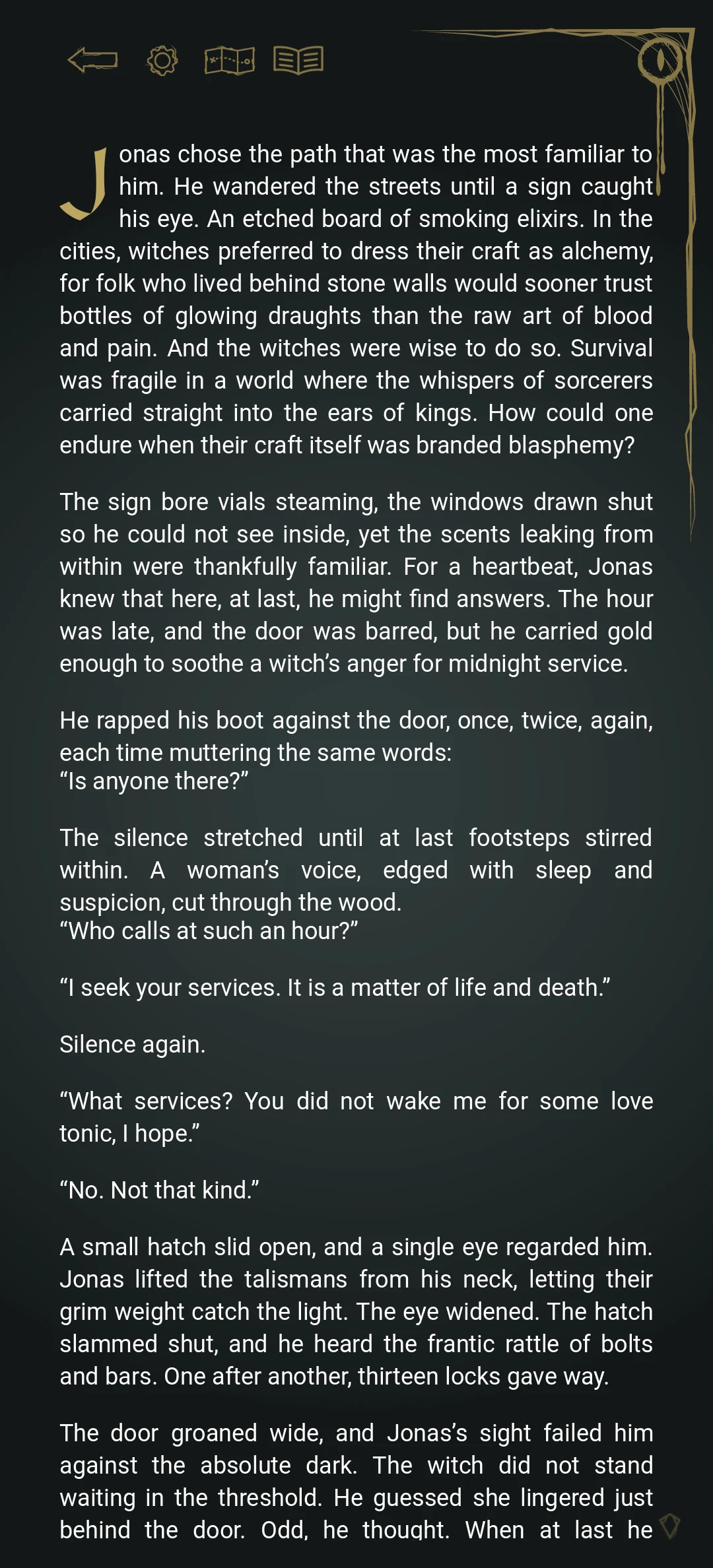 In the game’s own words: city witches dress their craft as alchemy, because the craft itself is branded blasphemy.
For the reader, this makes the kingdom frightening beyond the intentions of any single villain. Its prohibitions cannot erase the needs they condemn, and its people are forced to find precarious paths between need and punishment. These details let cruelty seep into the everyday life of the realm. We begin to understand how carefully someone must choose whom to trust, and what a confidence might cost beneath the gaze of power. By the time a mighty figure steps into view, the reach of that power is already wrapped around us.
What a Person Can Learn to Live With
A character can become difficult to defend long before they become difficult to understand. We have followed their fear through the dark closely enough to recognise its shape, and we know what they stand to lose. When they cross a boundary, we may feel the terrible logic that carried them there. That intimacy makes judgment uncomfortable, especially when the story gives us time to witness the wound from another person’s side.
Early in Jonas’s journey, he opens his father’s grave to recover the gold hidden inside the dead sailor’s body. He needs the money for the road ahead, and his son is somewhere along that road. The purpose is urgent; the means lead him into a grave he once made with his own hands. Nothing about finding Hekion makes that encounter with his father’s remains gentle. Devotion and desecration occupy the same breath, and The Red Tomorrow leaves you to reckon with both.
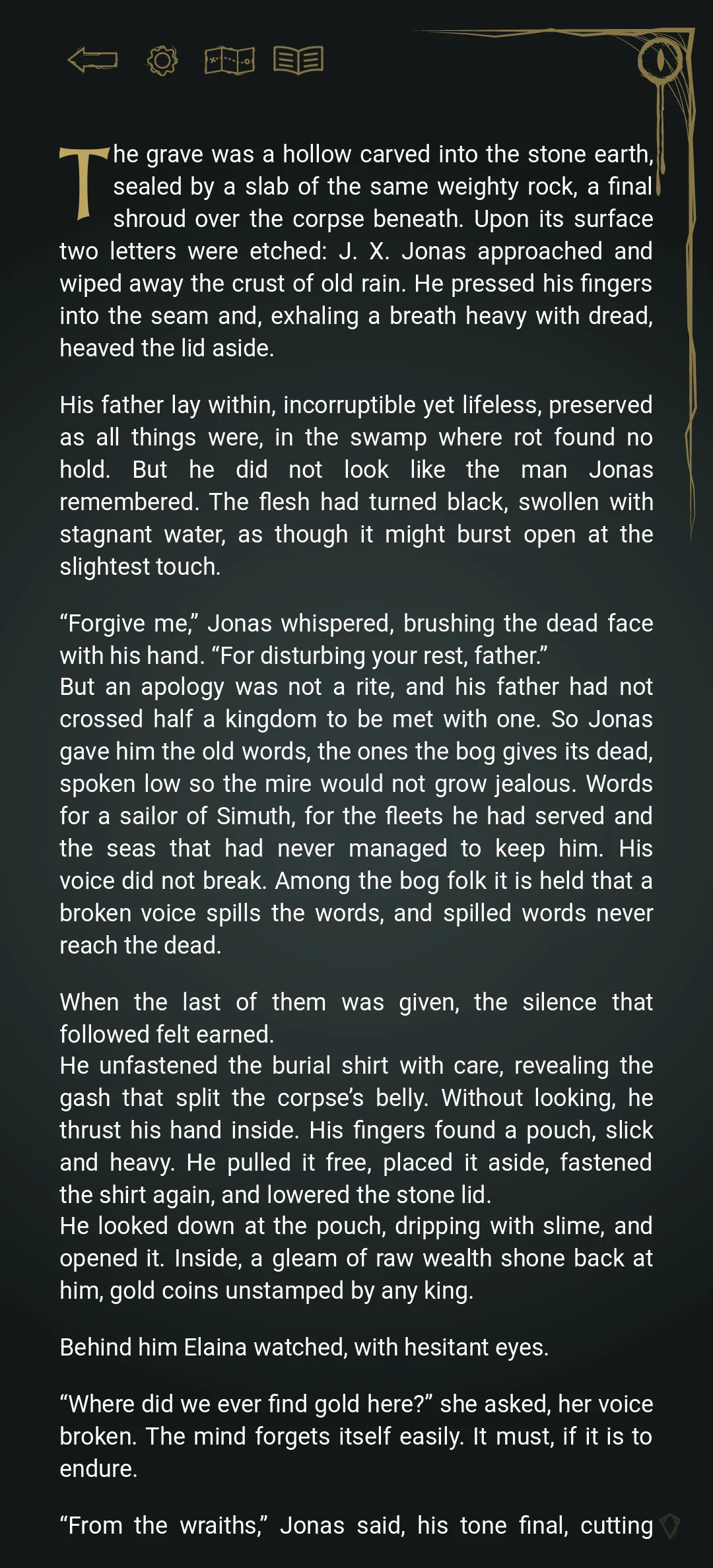 Chapter six: the slab marked J. X., the father beneath it, and the gold that pays for the road.
Grimdark often works through this intimacy with compromised people. A love worth defending can narrow someone’s vision until another person’s need begins to look like an obstacle. At the Narrow Pass, Jonas may turn away a woman whose sister has been taken by the Conclave. You decide whether he will make room for her grief beside his own. Her loss does not become smaller because his purpose matters to him, and the story places the uncomfortable responsibility of choosing in your hands.
 At the Narrow Pass: take her with you, leave her here, or refuse. Then what refusing sounds like.
An interactive novel asks you to answer that plea yourself, with Jonas’s grief still before you. Whatever he does next, you continue reading in the knowledge that you chose it, carrying both his need and the woman’s loss into the chapters ahead.
Such conflicts belong to other kinds of fiction as well. Their grimdark character comes from the surrounding outlook, from how little confidence we have that good intentions will spare anyone damage. There can still be people whose cruelty is plain, and people whose generosity asks for nothing in return. Moral ambiguity does not require every character to share the same degree of corruption. It often lies in the conduct of someone we desperately want to succeed.
What Violence Leaves Behind
A fighter’s skill can be thrilling to read about, even when the violence itself is horrifying. Grimdark often makes that pleasure uneasy by staying close to the people who suffer it. In “The Value of Grit”, Abercrombie writes about the fear and lasting damage that an intimate view of violence can bring into fantasy. Grit is one tool available to a writer, not a measure of every story’s worth.
For the reader, the telling matters. Notice whose pain receives attention when the fighting ends, and what the survivor believes he has accomplished. A dangerous opponent’s death may bring relief without making the act beautiful. Someone can fight courageously and still return to circumstances that courage has barely touched. The battle may have driven away the immediate danger while leaving the powers that made it necessary untouched.
Graphic description is only one way to create that unease. A threat can dominate a conversation when the person making it has the authority to carry it out. Fear changes what another person dares to say, and the reader can feel the coercion in an answer that would otherwise seem harmless. Nor must every death teach the survivors a lesson or serve some grand design. Waste and futility have their place in a bleak story, alongside moments when resistance achieves something worth the struggle.
In The Red Tomorrow, Jonas’s survival can bring relief without quieting our misgivings about the means he used. We have followed him closely enough to want him to reach Hekion, yet the lives of the people he encounters still have weight beyond their part in his search.
The Things Worth Holding On To
Jonas was a father before he had a son to search for. Long before the journey, he bought books for Hekion, spending what little he had to feed the boy’s hunger for stories. That tenderness belongs to his life as surely as the violence does. Without it, we would know what he was trying to recover, but we would understand far less about why the loss could carry him through an entire kingdom.
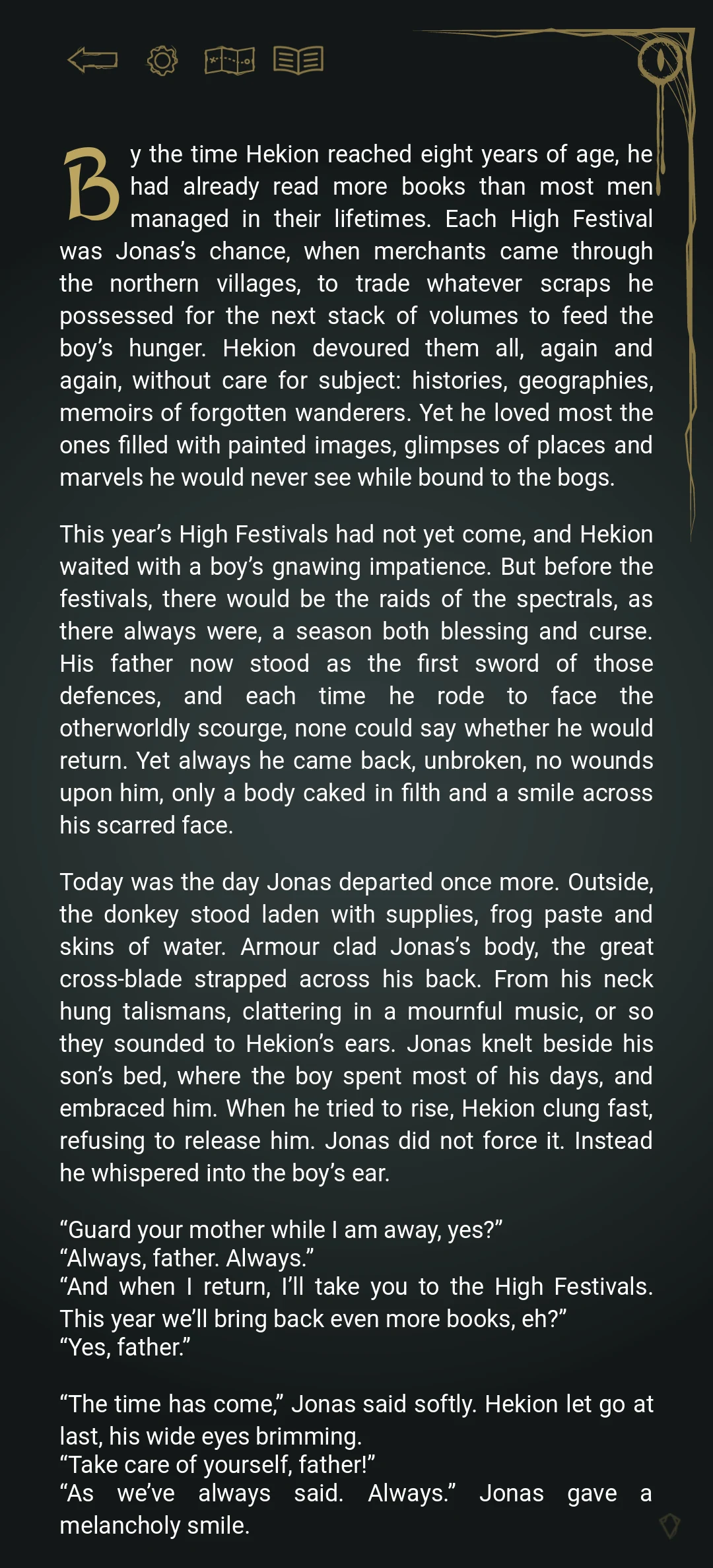 Before the raids: the High Festival books, a promise of more, and a boy who will not let his father say goodbye.
Grimdark has room for attachments like these. Affection can be sincere, and a kindness can remain a kindness even if it changes nothing beyond the person receiving it. A bleak world need not reveal every decent act as a hidden transaction. The uncertainty lies in what such acts can endure and accomplish. Someone may keep a promise at terrible cost and find that the world takes no notice, while the person who received it remembers for the rest of their life.
Hope, too, can remain alive without telling us how the story must end. Abercrombie’s account of his own cynical fiction in “Why so Cynical?” leaves room for small successes, humour, and people who turn out better than we expected. An outlook can be dark without making every outcome identical. If ruin were certain at every turn, there would soon be little left for the reader to fear or desire.
Jonas has no kinder kingdom waiting beyond the horizon. He must search for Hekion in this one, carrying a devotion that cannot answer every demand made along the way. You choose for a man whose love for Hekion shapes the way he understands what he encounters. Caring about him makes the search urgent for us, too, even when we begin to question the course we have chosen for him.
How to Recognise Grimdark Fantasy
When you are trying to place a story, look at the beliefs running beneath its events. Watch what happens when someone acts honourably, how authority excuses itself, and whose suffering becomes acceptable in pursuit of a worthy cause. A single cruel deed or disastrous ending will seldom tell you enough. The story reveals its outlook through the lives it lets us follow.
Then look at the people carrying it forward. Their flaws may reach beyond a temper or a wounded past into the way they use others, justify themselves, or learn to accept what once troubled them. Understanding their motives can draw you nearer without making their actions admirable. Alongside that closeness, a distrust of power and a bleak view of what victory can repair give a stronger indication of grimdark than the number of battles on the page.
These qualities are tendencies rather than admission rules. Stories overlap, and readers disagree about where the label belongs. A novel can contain lasting wounds and difficult choices while remaining deeply hopeful about justice. Another can disturb us through a quieter account of how people behave when nothing stands in their way. Reading for the outlook leaves room for both, and for an individual story to surprise us.
The Road You Choose for Jonas
An interactive novel draws you into these questions through the act of deciding. You read closely enough to understand why Jonas might act, and then you choose what he does. An earlier decision can alter the possibilities waiting further on, so the knowledge you gain about him becomes bound up with the course you have given his search. The man has a history and a temperament of his own; the direction he takes through this kingdom remains in your hands.
The Red Tomorrow spans 181 chapters and more than a hundred thousand words, with illustrations throughout and fifteen endings shaped by your decisions. Along the way, seven Crossroads unlock one by one as Jonas reaches key turning points, and you can rewind to any you have unlocked to follow another route. It runs entirely offline, so you can follow Jonas into the quiet hours when the world outside has gone still.
 The seven Crossroads unlock one by one as the story reaches them.
The kingdom has had generations to make its cruelties ordinary. Jonas has a son to bring home, and no lifetime long enough to wait for the world to become kind. What he does as he searches, and what becomes of him along the way, are decisions we leave with you.
Follow Jonas into the kingdom, and decide how far he will go for Hekion.