There is a particular kind of restlessness that seizes a reader the moment a good story ends, and refuses to let go afterward. The last page turns, the credits climb, and somewhere behind you a gate swings shut with a sound only you seem to hear. Whoever you would have saved, or doomed, or trusted far too easily, none of it was ever truly yours to decide, and some part of you goes on quietly resenting that fact long after the book has closed. You were a guest in someone else's dream, however vivid, and dreams rarely stop to ask your opinion before they end.
Windmill Tales Interactive grew directly out of that irritation, sharpened over years of turning final pages and wanting, badly, to argue with them. We refuse to believe a story worth entering should leave you standing at the threshold, nose pressed against the glass, watching a world carry on gorgeously without you. We believe the door should swing open at your touch, and that you should be allowed to walk through it and bleed a little on the other side, if that is what the story ends up demanding of you.
How This Began
Windmill Tales Interactive keeps its headquarters in a village in northern Greece, a small, sunlit knot of streets where the mountains lean close enough to feel like company rather than scenery, and where the pace of life still bends to the seasons instead of the clock. Few people expect a fantasy studio to come from a place like this, and that mismatch turned out to be the whole point: distance from the noise of larger cities left far more room in our heads for stranger ideas to take hold and grow teeth.
What holds this studio together was never geography anyway. It is a shared fixation, bordering on obsession, with the moment a reader stops being a passenger and starts casting a shadow of their own inside the story, a shadow with weight, with appetite, with a will the narrative is forced to reckon with rather than simply narrate around.
We are a small studio, and staying that way suits us fine. Fewer hands means fewer compromises between what a story wants to become and what finally reaches the screen it was always destined to live on. It also means every choice woven into a narrative has been argued over late into the night, rewritten more times than we would like to admit, and occasionally hurled back into the dark before it earned the right to see daylight.
What We Actually Make
Our work lives at the crossing point of interactive fiction and game design, in territory where fantasy and science fiction are allowed to grow dark and unflinching by choice, and where mechanics exist to serve consequence rather than decoration. A talisman you carry has a habit of becoming a debt you never knew you owed. A door you decide not to open has a way of becoming the exact reason someone else never makes it home. These are the bones a story is built on, the spine of how it remembers you long after you have set it down and moved on with your life.
Alongside the fiction, we also build tools, instruments that hand that same creative fire to other people determined to tell their own stories: some gathered around a table littered with dice and half-finished character sheets, others working alone inside the private, half-lit worldbuilding notebooks so many of us keep and rarely show to anyone.
What's Out There Now
The Red Tomorrow is where most readers meet us first: an interactive novel following Jonas, a man newly returned from an ancient, ritualistic battle fought against spectres that claw their way up out of old wells when the rites are not kept, only to discover that his son has been taken in his absence, drawn into a kingdom where prophecy has curdled into something far closer to a curse. Across a hundred thousand words and fifteen possible endings, nothing is decided on your behalf. You choose, again and again, and the consequences take root in places you will not even notice until they have grown tall enough to throw a shadow directly over you.
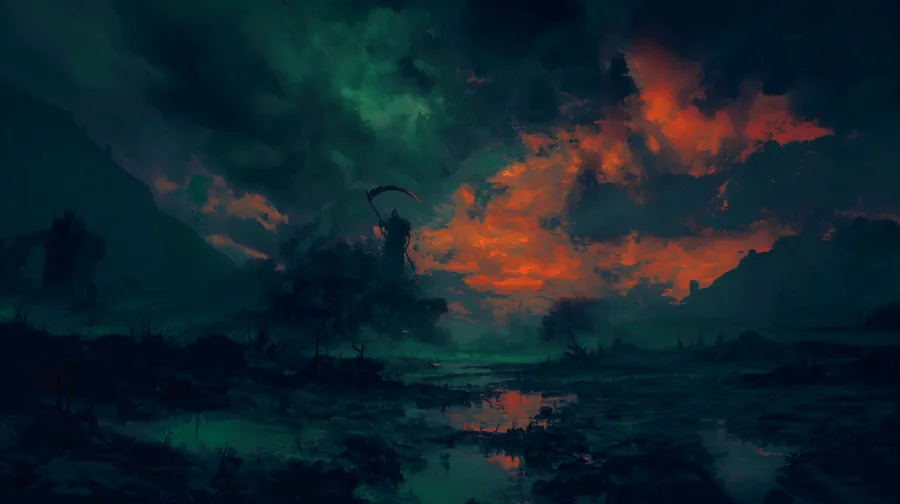 The Red Tomorrow: a hundred thousand words, fifteen endings, and no choice made on your behalf.
Fantasy World Generator is cut from entirely different cloth: an instrument built for people determined to tell their own stories rather than a story of ours. It is a free, offline toolkit for game masters, tabletop players, and writers who need a name, a monster, or a ruined kingdom's thousand-year history summoned in seconds rather than surrendered to an evening lost searching for one. What began as a humble name generator kept growing, stubbornly and almost against our will, until it became something closer to a full worldbuilder's arsenal, and it keeps expanding even now, close to fifty tools deep and still climbing.
 Fantasy World Generator: free, offline, and close to fifty tools deep.
The Ones Still Taking Shape
Two finished worlds are only the opening move of what this studio intends to build. Terminal: Stolen Light, a science fiction story told through the pale glow of an old terminal screen and a voice transmitting from somewhere it has no right to still exist, is nearly ready to reach you. Behind it waits a longer list we have not made public yet, several more interactive stories and tools already taking shape in the dark, each carrying its own tone, its own mechanics, its own private reasons for wanting to exist at all. This studio has no intention whatsoever of stopping at three.
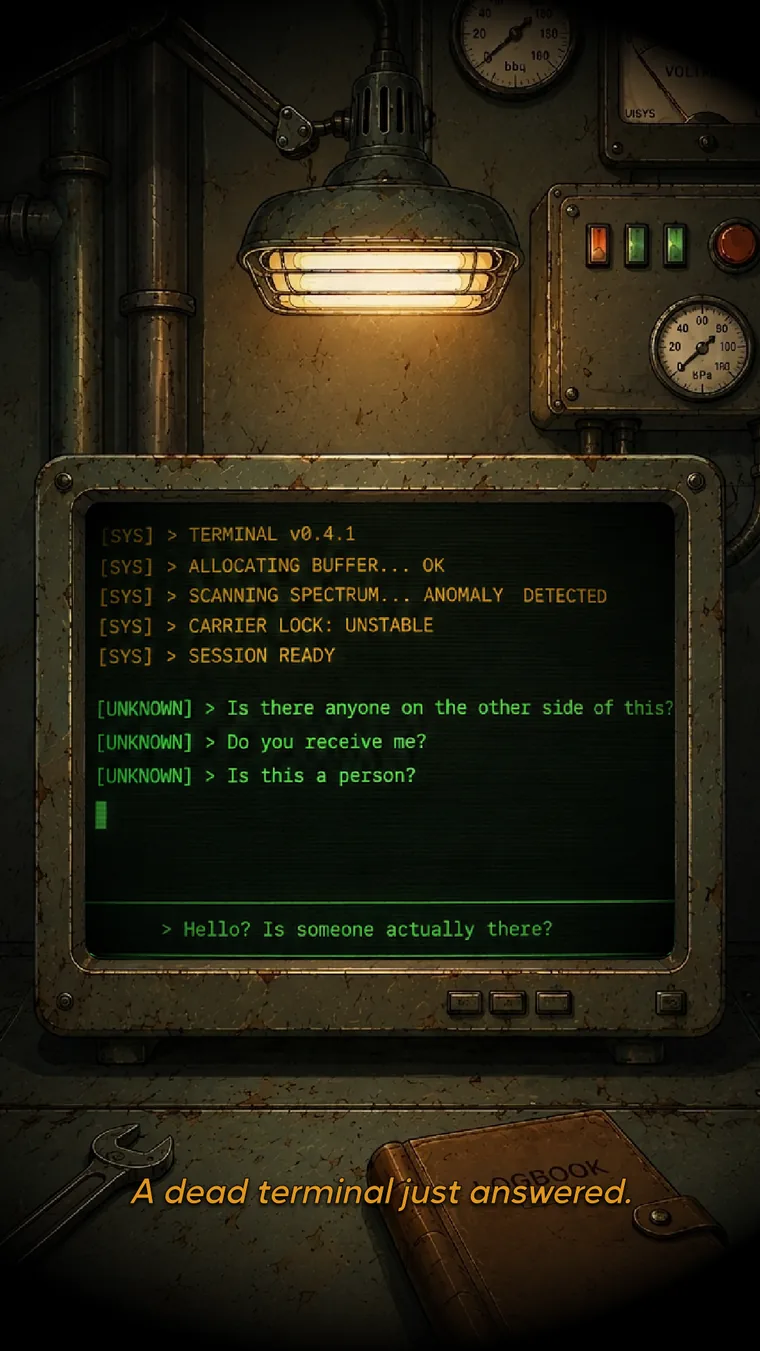 Terminal: Stolen Light. Nearly ready.
An Open Door
This blog will be where most of that gets said first: the design decisions wrestled into shape behind a branching narrative, the strange and stubborn logistics of building a worldbuilding toolkit that refuses to stop expanding, and the occasional glimpse behind whatever door we happen to be prying open next.
The Red Tomorrow and Fantasy World Generator are both waiting for you now, and there is considerably more stirring behind them than we have let on so far. If any of this sounds like your own flavour of restlessness, do not wander off just yet. Sign up for our newsletter, and we will make sure you are standing right there the moment the next door opens, and something on the other side finally looks back at you.